
Chill. We’ve Been in Your Corner – You Just Didn’t Know It.

The word "Chill." Written in a handwriting font in white on a blue field.

There’s a specific kind of exhaustion that sets in at week five of any project that was planned – and budgeted – for three. It’s not dramatic. It doesn’t announce itself. It just settles in quietly – in the fourth rescheduled deadline, the apologetic client email you draft and redraft, the Sunday afternoon you spend doing the work that Friday afternoon was supposed to hold. You’re not failing. You’re just running a marathon that started as a sprint, but kept getting longer while you continued running it – and doing it without the freelance talent support that could have made all the difference.

Most people push through. They redistribute the load, lean into the team, ask too much of the people who can least afford to give more, and eventually deliver something that’s good enough but not what it was supposed to be. Then they take a breath, declare it a win, and quietly file the whole experience under “that was rough” – without ever stopping to ask why it had to be rough in the first place.

That question, “why?” is worth asking. Because the answer, almost every time, is the same: there wasn’t enough flexible talent support in the room when the walls started closing in.

Continue Reading

You Meant Well. It Landed Wrong. Now What?

A split-screen photo depicting "intent vs impact" by showing two people on a phone call. The woman, on the left, looks happy and helpful, the man, on the right, appears confused or frustrated.

You’ve been there. You sent the message, made the comment, delivered the feedback – and then watched the other person’s face do that thing. The slight furrow. The pause that lasts just a beat too long. Or worse, the silence that stretches across a chat thread like tumbleweed through a ghost town.

You meant well. You always mean well. But somewhere between your brain and their inbox, something got lost in translation.

Welcome to the gap between intent and impact – one of the most underappreciated, quietly destructive forces in the modern workplace. It doesn’t make headlines. It doesn’t show up in quarterly reviews. But it chips away at trust, collaboration, and morale in ways that are very real and surprisingly expensive.

Continue Reading

Before the Phoenix Rises, There Are Embers

a photograph of ashes and embers, the embers form the word "EMBER"

A quick introduction before we dive in – I’m Chris, part of the leadership team at FlexTal. If you’ve visited our blog before, you know our content typically lives in the world of workforce strategy, flexible talent, and the future of how companies get work done. All important stuff. But our digital team has been nudging me for a while, asking me to take over the feed every now and then and share something a little more personal – so welcome to The Back Burner, where I’ll surface the ideas, observations, and occasional rabbit holes that don’t always make it into the main feed. Personal ramblings from someone who has spent 25+ years working as a freelancer, but who’s also logged his fair share of time in corporate cubicles.

So here I am. Fair warning: these posts may occasionally involve things like corporate events and musings about workforce solutions, but more than likely I’ll end up in rabbit-holes on ideas that have little or nothing to do with staffing models or hiring decisions – think of this space as a blank canvas to have you join in on the conversations I have with myself when I’m stuck in the desert, bumper-to-bumper, on I-10 during my commute.

This is one of those.

Continue Reading

Asynchronous Collaboration Strategies That Actually Work

a photograph depicts asynchronous collaboration strategies. Showing a woman sitting at a desk taking notes while also looking at her laptop monitor and external display. her laptop shows a video-chat app, her other monitor displays a graph. The room filled with natural light from windows has plants, books, and a lamp in the frame.

There’s a particular kind of chaos that sets in around day three of managing a remotely distributed team.

You ping your designer in Istanbul at 8 AM your time. She’s already wrapped up for the day. Your developer in Portland won’t be online for another four hours. Your content strategist in Austin just sent eleven voice memos – all of them important, none of them short. And you’re sitting there, the supposed orchestrator of this whole operation, wondering how anyone gets anything done when everyone’s clocks are pointing in different directions.

Continue Reading

The Invisible Ceiling: What to Do When Your Core Team Has Nothing Left to Give

A woman walks with a strange lean through an office space that seems to have an invisible ceiling - illustrating the concept of a core team capacity being reached by hitting an invisible ceiling.

There’s a particular kind of organizational dysfunction that doesn’t announce itself. It doesn’t show up in a boardroom slidedeck or trigger a crisis meeting. It moves quietly – through the organization, through the people, through the work – until one day you look around and realize that your best people are exhausted, your timelines have gotten optimistic in a way that no longer means anything, and the quality of output has drifted just enough that you’ve started wincing at things you used to feel proud of.

This is what hitting core team capacity actually looks like. It’s an invisible ceiling – an unseen, but all too real cap on capacity. Not a dramatic meltdown. A slow, grinding erosion.

Continue Reading

Skill Gaps vs Capacity Gaps

Illustration of two orange human figures; the one on the left is juggling four icons that represent skills, the one on the right is juggling several circles that represent capacity. Each figure is juggling one empty item. The illustration reinforces the idea of skill gaps vs. capacity gaps.

There’s a moment most business leaders know all too well. A project stalls. The deadline starts looking less like a target and more like a double-dog-dare. The roadmap for one product sits untouched while the team sprints on other fires. The instinct is immediate and almost universal: we need more people.

But more people doing what, exactly? And what kind of people – and for how long?

Continue Reading

The Hybrid Team Model Works. Here’s Proof.

photo of 3 people working on different devices at the same table. Overlay of text says, "the hybrid team model works."

There’s a quiet revolution happening inside some of the world’s most competitive companies – and it doesn’t involve a rebrand, a pivot deck, or a ping-pong table that nobody actually uses. It’s something far more practical: the best operators have stopped treating their workforce as a binary choice. Full-time or contractor. Headcount or outsourced. Instead, they’ve built something more deliberate – a hybrid team model that blends permanent staff with specialized freelance talent in a way that’s strategic, not accidental. The result is a workforce that’s more agile, more cost-effective, and far better equipped to handle the actual shape of modern business demand.

Once you see how well it works, it’s genuinely hard to justify going back to the old way.

Continue Reading

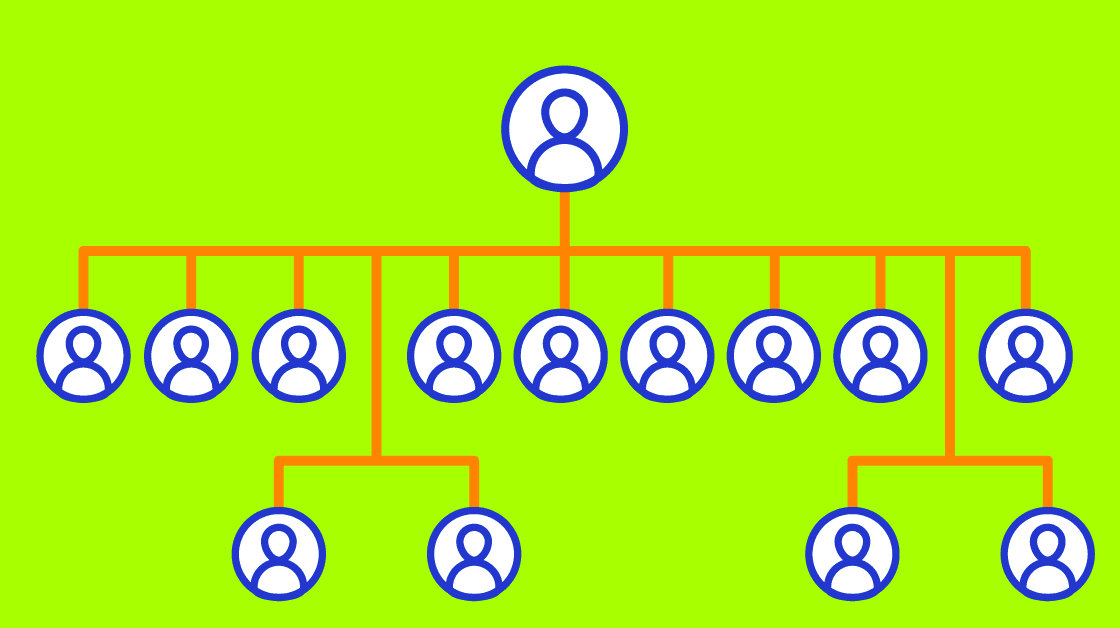
Your Org Chart Might Be the Problem

illustration of a non-specific monster with a head and wings like a bat and with horns. The image depicts the monster that creates tension between anorak chart and flexible talent.

There’s a particular kind of organizational stubbornness that most companies don’t even realize they have. Left unexamined, it takes on a life of its own – a shape-shifting creature with many forms. It appears as the onboarding checklist that assumes everyone needs a laptop waiting at their freshly dusted cubicle or shipped directly to their home address. Then, it resurfaces as the all-hands meeting invite that goes out to “all staff” without a second thought. It shows up again, most stubbornly, in the KPI dashboard that equates headcount with success.

It might be a polite creature – it doesn’t mean any harm. You might have even named it, “legacy thinking” or “always-been-done-that-way.” But call it what it is: a monster. It is quietly undermining your ability to work effectively with an org chart and flexible talent side by side.

Continue Reading

Reliability in the Workplace is the Real MVP

Four men in business suits play basketball in a stadium filled with spectators. Two men wear gray suits, two men wear blue. One player is shown assisting the other depicting reliability in the workplace.

There may be no more underestimated driver of performance than reliability in the workplace.

Skills matter. Strategy matters. Talent certainly matters. But without consistency, none of those strengths sustain momentum for long. Reliability in the workplace is what turns strong ideas into executed plans and promising hires into trusted contributors. It is the invisible infrastructure holding everything together.

It does not sparkle. It rarely gets applauded in all-hands meetings. No one throws a parade because someone delivered what they said they would deliver on Tuesday at 3:00 p.m. by Tuesday… at 3:00. And yet, when reliability disappears, everyone notices immediately.

Because work that looks impressive and work that actually works are two very different things.

Continue Reading

A Workspace That Supports Focus – Not Hustle

a woman sits at her office desk and focuses on her computer and notes

Why Calm, Intentional Work Environments Are the Real Productivity Hack in 2026

Somewhere along the way, productivity got loud. And the idea of a workspace that supports focus got complicated.

Standing desks slid from tech-savvy badge of honor to boilerplate expectation. Slack notifications became a cacophony of noise akin to a spastic metronome. “Always on” stopped sounding like a warning and started showing up as a job requirement. And before anyone really noticed, the modern workspace stopped being about helping people think – and started being about proving they were busy.

But here’s the quieter truth most high-performing teams already understand: hustle doesn’t scale. Focus does.

Continue Reading