
Category

Workplace Trends

Quiet Cracking: What Your Best-Behaved Employees Aren’t Telling You

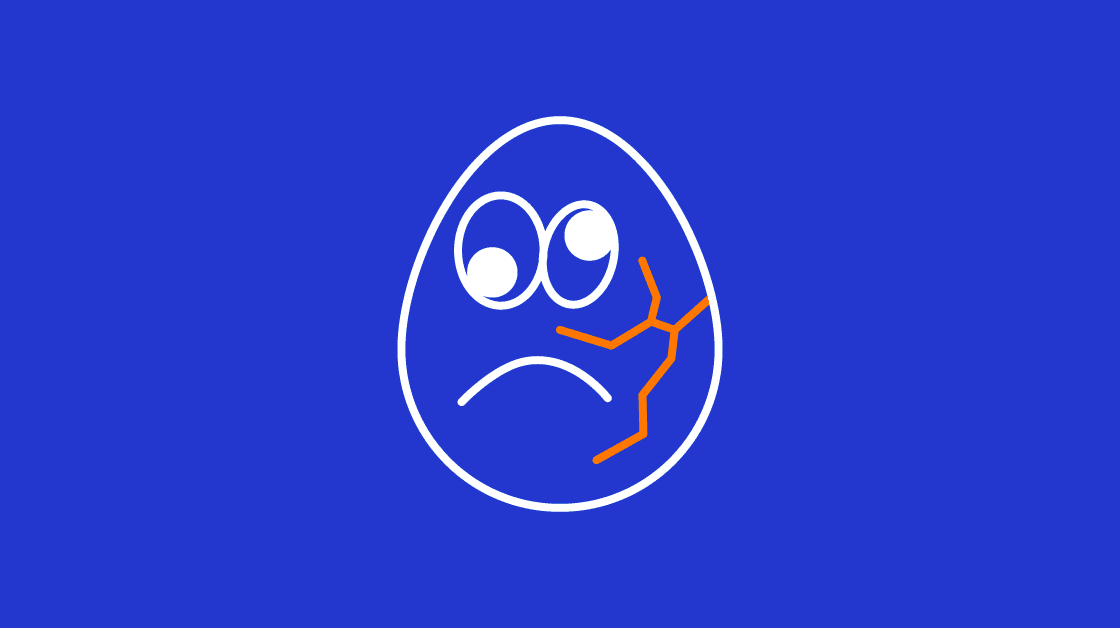
illustration of an egg with a sad face on it - and a crack. Implying the idea of quiet cracking.

Somewhere on your team right now, someone is doing everything right. Showing up on time, hitting deadlines, saying yes in the meeting they’d rather have skipped. All while quietly falling apart on the inside. Researchers have started calling it quiet cracking. It might just be the most misleading workplace trend to hit HR conversations in years. Why? Because from the outside, it looks like nothing is wrong at all.

The term comes from a TalentLMS survey of a thousand U.S. workers, and the numbers are worth sitting with. More than half of employees say they’ve experienced some version of quiet cracking, a persistent unhappiness that erodes performance and motivation without ever showing up as a resignation letter. About one in five say they feel it constantly. Another third feel it often enough to notice. None of that shows up on a retention dashboard, which is exactly the problem.

This isn’t one vendor’s numbers looking for a headline, either. Research published in Psychology Today also studied more than a thousand workers. They landed in nearly the same place, finding 55 percent quietly cracking. Two independent studies landing within a few points of each other. That stops looking like a buzzword and starts looking like a pattern.

Quiet cracking isn’t the same as burnout, and it isn’t quiet quitting either, even though the family resemblance is obvious. Burnout tends to announce itself. Quiet quitting is a visible pullback, a person doing the job and nothing more. Quiet cracking is quieter than both. It’s the employee who still delivers, still shows up prepared, and still seems fine in the one-on-one, while privately wondering whether any of it still adds up to something worth staying for.

Why Quiet Cracking Spreads Fastest on Stable-Looking Teams

We’ve written before about what happens when a core team is stretched past its real capacity. Quiet cracking is the emotional version of that same math. Leaders have gotten used to reading low turnover as a win. Fewer resignations, fewer open reqs, less time spent backfilling roles. But a team that isn’t leaving isn’t automatically a team that’s thriving. Some of that stability is loyalty. A good amount of it right now is just people deciding that a job they’ve stopped loving still beats a job market they don’t trust.

That distinction matters because quiet cracking tends to hide best in exactly the teams leadership feels best about. The quarterly numbers look fine. Attendance looks fine. It’s the kind of stability that invites leaders to stop asking questions, which is precisely when the questions matter most. A meaningful share of workers in that same survey said they weren’t confident they had a future at their current company even while showing up and performing well today, which is a strange and uncomfortable thing to hold at the same time.

It also tends to hide in plain sight because the signs are ordinary enough to miss. A person who used to speak up in meetings goes quiet, not dramatically, just gradually. Someone who used to volunteer for the stretch project starts doing exactly what’s asked and nothing past it. Sick days creep up by one or two a quarter. None of it reads as a crisis. All of it reads as a person, which is exactly why quiet cracking is so easy for a busy manager to miss until the resignation letter makes it official.

The Cost of Letting It Go Unnoticed

Disengagement has a price tag, and it’s not a small one. Gallup has pegged the global cost of disengaged employees at roughly 8.8 trillion dollars a year in lost productivity, a number so large it stops feeling real until you scale it down to one team, one department, one person quietly doing the bare minimum required to stay employed. Quiet cracking rarely shows up in a single dramatic moment. It shows up in slightly lower creative output, slower decisions, less willingness to raise a hand for the harder project, all while the person doing it looks, on paper, completely fine.

The uncomfortable part for a lot of leaders is that quiet cracking often isn’t about laziness or a bad attitude at all. It’s frequently a capacity problem wearing an emotional disguise, a pattern reporters have connected directly to a labor market where fewer people feel they can afford to leave. Forbes has framed it even more specifically, as a byproduct of financial strain, staying and struggling quietly because leaving feels riskier than cracking in place. People already stretched thin, already covering unfilled roles, don’t always burn out visibly. Sometimes they just quietly stop believing the extra effort is going anywhere.

Where Flexible Capacity Fits Before Things Break

This is where a lot of teams get the timing backwards. They wait for quiet cracking to become a resignation before doing anything about workload, when the more useful moment to act is well before that, while the team is still present and still capable, just running on fumes. Bringing in flexible talent to cover a project, a skill gap, or a temporary overload isn’t a consolation prize for teams that can’t hire. It’s often the fastest way to relieve pressure on the people already there, without asking anyone to take on a manager title they didn’t want or absorb one more responsibility they don’t have room for.

A dedicated Customer Success Manager can help pinpoint where that pressure actually lives, whether it’s a skills gap, a bandwidth gap, or both, and match in pre-vetted independent talent through FlexTal’s matching process before the good people already on the team quietly decide it isn’t worth the effort anymore. It’s a smaller, more specific move than a hiring plan, and often a faster one.

You Won’t Need All the King’s Horses or All the King’s Men

None of this requires overhauling the org chart or promising a headcount increase leadership isn’t ready to approve. Sometimes the fix is as narrow as bringing in one experienced freelancer for eight weeks to take a project off a stretched team’s plate, or pairing a specialist with a manager who’s been quietly doing two jobs since a role went unfilled. The goal isn’t to replace anyone. It’s to stop asking already-tired people to keep absorbing more, quietly, indefinitely, until quiet cracking turns into something that shows up on the retention numbers after all.

Quiet cracking will probably fade from the headlines the way quiet quitting eventually did, replaced by whatever gets coined next. The underlying pattern won’t fade nearly as fast. People will keep showing up long after they’ve mentally checked out, and the teams that notice early, before it shows up in the numbers, will be the ones that keep their best people instead of just keeping their headcount.

The Job Hugging Problem: Not the Warm Fuzzy Kind

line drawing of blue chair on top of stop sign; referring to the practice of job hugging

Your turnover dashboard looks great this quarter. Nobody quit. Nobody got poached by a competitor with a nicer parking lot. HR isn’t scrambling to backfill three roles before the holidays hit. By every traditional metric, retention is a win. You might think it’s time for some job hugging… but that’s not quite the same thing as team high-fives. And if you aren’t sure what it is, it’s time to dig in.

Continue Reading

A Workspace That Supports Focus – Not Hustle

a woman sits at her office desk and focuses on her computer and notes

Why Calm, Intentional Work Environments Are the Real Productivity Hack in 2026

Somewhere along the way, productivity got loud. And the idea of a workspace that supports focus got complicated.

Standing desks slid from tech-savvy badge of honor to boilerplate expectation. Slack notifications became a cacophony of noise akin to a spastic metronome. “Always on” stopped sounding like a warning and started showing up as a job requirement. And before anyone really noticed, the modern workspace stopped being about helping people think – and started being about proving they were busy.

But here’s the quieter truth most high-performing teams already understand: hustle doesn’t scale. Focus does.

Continue Reading

The Ultimate Home Office Makeover Guide: Design, Tech, and Wellness Wins

photo of a home office with a tan leather chair next to a desk with a laptop on it. The photo has the words "the ultimate home office makeover guide" in the lower left corner.

There’s something about the start of a new year that makes even the most rational among us believe we’re about to become better versions of ourselves. Better organized. Improved focused. More intentional. Maybe even someone who drinks water before coffee. Every year, January arrives and it seems like everyone resolves to undergo an ultimate makeover of something or other. While some resolutions fade fast, one reset that actually sticks is the one that happens quietly, every weekday, in the place where work gets done – a home office makeover.

Continue Reading