

Tag

freelance strategy

You Meant Well. It Landed Wrong. Now What?

A split-screen photo depicting "intent vs impact" by showing two people on a phone call. The woman, on the left, looks happy and helpful, the man, on the right, appears confused or frustrated.

You’ve been there. You sent the message, made the comment, delivered the feedback – and then watched the other person’s face do that thing. The slight furrow. The pause that lasts just a beat too long. Or worse, the silence that stretches across a chat thread like tumbleweed through a ghost town.

You meant well. You always mean well. But somewhere between your brain and their inbox, something got lost in translation.

Welcome to the gap between intent and impact – one of the most underappreciated, quietly destructive forces in the modern workplace. It doesn’t make headlines. It doesn’t show up in quarterly reviews. But it chips away at trust, collaboration, and morale in ways that are very real and surprisingly expensive.

Continue Reading
Skill Gaps vs Capacity Gaps

Illustration of two orange human figures; the one on the left is juggling four icons that represent skills, the one on the right is juggling several circles that represent capacity. Each figure is juggling one empty item. The illustration reinforces the idea of skill gaps vs. capacity gaps.

There’s a moment most business leaders know all too well. A project stalls. The deadline starts looking less like a target and more like a double-dog-dare. The roadmap for one product sits untouched while the team sprints on other fires. The instinct is immediate and almost universal: we need more people.

But more people doing what, exactly? And what kind of people – and for how long?

Continue Reading

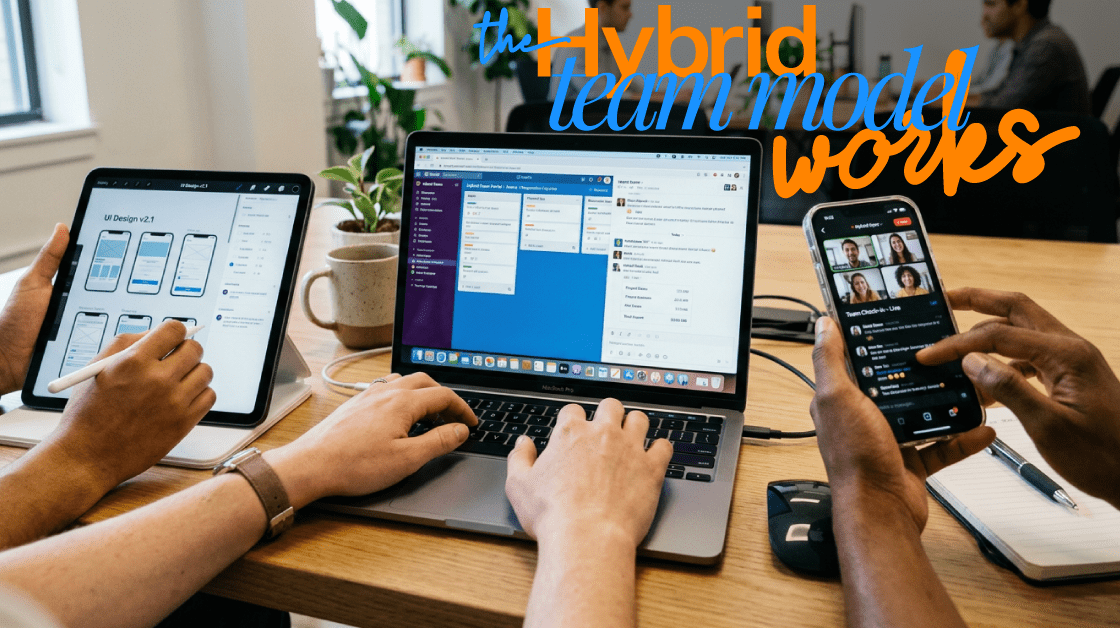
The Hybrid Team Model Works. Here’s Proof.

photo of 3 people working on different devices at the same table. Overlay of text says, "the hybrid team model works."

There’s a quiet revolution happening inside some of the world’s most competitive companies – and it doesn’t involve a rebrand, a pivot deck, or a ping-pong table that nobody actually uses. It’s something far more practical: the best operators have stopped treating their workforce as a binary choice. Full-time or contractor. Headcount or outsourced. Instead, they’ve built something more deliberate – a hybrid team model that blends permanent staff with specialized freelance talent in a way that’s strategic, not accidental. The result is a workforce that’s more agile, more cost-effective, and far better equipped to handle the actual shape of modern business demand.

Once you see how well it works, it’s genuinely hard to justify going back to the old way.

Continue Reading