



When you’ve been in business long enough, you’ll reach a point where a re-brand is needed. New colors, new logo, new website, new … everything. A re-brand can be intimidating, especially if you’re trying to take it on internally.

Do you want to grow your business and reach more audiences that convert into leads? Then a tactic that can help expand your business is paid media, a method of using promoted (paid for) content such as social media posts, video ads, pop-ups, etc. to reach target audiences. Essentially, paid media is content that businesses pay for to reach more people.

Malcolm Gladwell’s bestselling book, Blink: The Power of Thinking Without Thinking, has a provocative thesis. Contrary to commonsense, which warns against “snap judgments,” Gladwell argues that, often, our automatic, largely unconscious way of making decisions throughout the day is a fairly reliable way to navigate life in the modern world. “There can be as much value in the blink of eye,” writes Gladwell, “as in months of rational analysis.”

The current pandemic is dramatically impacting American small businesses and entrepreneurs. According to a recent report, almost 7.5 million of America’s approximately 30 million small businesses may be forced to close permanently over the next several months. However, many believe that – like other “black swan” events – the COVID-19 pandemic will fuel the next wave of innovation, and more resilient and world-changing startups than ever before.

What is an Entrepreneurial Edge?
Entrepreneurs are constantly seeking an edge, an advantage. In fact, most entrepreneurs are wired to look at the world from an opportunist’s perspective and are regularly working an angle, an approach, or a way of attacking a business opportunity that others have missed or have left exposed.

An Introduction to a Series of Articles
(1st article in a series)
THE FUTURE OF WORK IS HERE
Many organizations and thought leaders are attempting to predict the future of work during this time of unprecedented change. We are experiencing the end of the Industrial Era and the rapid rise of the Age of Digital Dominance. This article summarizes a series of articles written to add information and energy to a growing movement committed to finding solutions that will drive economic development and prosperity for workers, businesses and communities in rural and middle America. The other articles include: 1) The Transformation is Inevitable: 2) Winners and Losers; 3) Organizations of the Future; and 4) The Age of Digital Dominance. (Author note: These articles were originally written six months before Covid-19 hit. The pandemic will only accelerate the trends described).

THE TRANSFORMATION IS INEVITABLE—The Industrial Era gives way to the Age of Digital Dominance
(2nd article in a series)
During the next decade, industries, local economies and the nature of work will be transformed on a massive scale and at an accelerating pace. In the U.S., 40% of our workforce is employed in an occupation that could see significant job losses(1). Although many new jobs will be created, the net impact on jobs will be felt unevenly by industries, communities and workers. Rural and middle America that prospered during the Industrial Era are at a greater risk in the Age of Digital Dominance, as many jobs requiring lower skills will be disproportionally disrupted by six unstoppable forces.

WINNERS AND LOSERS—Jobs and Communities at Risk in the Age of Digital Dominance
(3nd article in a series)
In the future of work, there will be winners and losers.
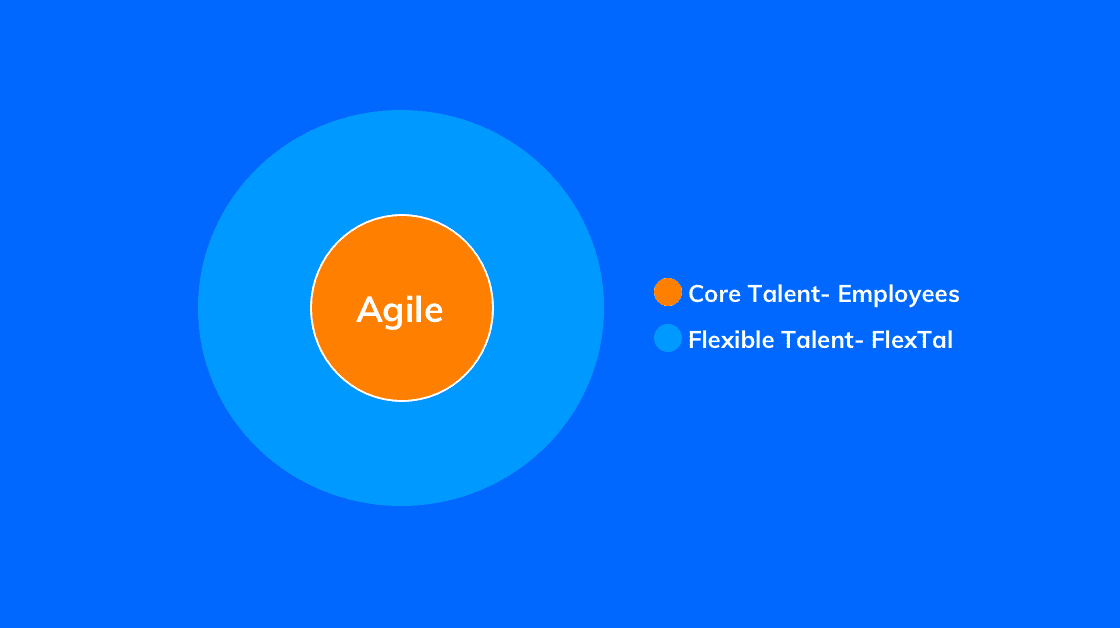
ORGANIZATIONS OF THE FUTURE—Step Aside Boomers, Millennials are Taking Over
(4th article in a series – by Duncan Robins)
ORGANIZATIONS OF THE FUTURE ARE BEING FORMED TODAY
In the near future, competition will be so fierce in the winners-take-all global market that corporations will be forced to break with their rigid, Industrial Era, organizational structures.